July 14, 2011

Africa’s newest nation emerges as South Sudan overcomes

Special to USAfricaonline.com

July 8, 2011, Juba: South Sudan became the world’s newest country early Saturday, officially breaking away from Sudan after two civil wars over five decades that cost the lives of at least two million people.

Residents of the new Republic of South Sudan danced in the streets, banged on jerry cans and chanted the name of the world’s newest president, Salva Kiir.

South Sudan earned independence at 12:01 a.m. Saturday (5:01 p.m. EDT Friday), the culmination of a January independence vote guaranteed in a 2005 peace deal that ended the most recent north-south war.

The 193rd country recognized by the United Nations and the 54th UN member state in Africa, South Sudan is one of the poorest and least-developed places on earth. Unresolved problems between the south and its former foe to the north could mean new conflict along the new international border, advocates and diplomats warn.

The young government faces the huge challenge of reforming its bloated and often predatory army, diversifying its oil-based economy, and deciding how political power will be distributed among the dozens of ethnic and military factions. It must also begin delivering basic needs such as education, health services, water and electricity to its more than 8 million citizens.

A draft constitution passed this week lays the groundwork for President Kiir and the legislature, who were elected last year, to serve out their five-year terms. The legislature’s few opposition lawmakers are unhappy with the draft, but it now serves as an interim constitution until multiparty elections are held.

Guests for the country’s inauguration include UN Secretary-General Ban Ki-moon, former U.S. Secretary of State Colin Powell, U.S. Ambassador to the UN Susan Rice and General Carter Ham, commander of the U.S. Africa Command. Sudan President Omar al-Bashir, a deeply unpopular man in Juba, also is expected.

A $1 billion yearly UN peacekeeping mission with a 10,000-member peacekeeping force has monitored implementation of the 2005 peace deal. The mission has drawn criticism for its failure to protect Sudanese civilians caught in violence along the north-south border and in the south, where conflict has killed nearly 2,400 people this year alone.

The UN Security Council on Friday unanimously approved a new peacekeeping force for South Sudan, authorizing the deployment of up to 7,000 military personnel and 900 international police, plus an unspecified number of U.N. civilian staff including human rights experts. ref: AP

June 21, 2011

A Call To Prayer and Fasting to End the Nuba Genocide, and for the Peace of all Sudan

From: http://www.anglicancommunion.org/acns/news.cfm/2011/6/21/ACNS4883

To all my brothers and sisters in Christ,

On behalf of my people in the Nuba Mountains of Sudan we are asking all Sudanese Christians wherever they are, and the Church throughout the world to join with us in a day of prayer and fasting on June 26, 2011.

Once again we are facing the nightmare of genocide of our people in a final attempt to erase our culture and society from the face of the earth. It is not a war between armies that is being fought in our land, but the utter destruction of our way of life and our history, as demonstrated by the genocide of our neighbors and relatives
in Darfur. This is a war of domination and eradication, at it?s core it is a war of terror by the government of Sudan against their people.

As we approach the July 9 day of independence for the New South Sudan, President Bashir has declared for all the world to hear that Sharia will be the law of the land for the North, refusing to recognize the legitimate presence of the Christian minority. It is a declaration of their determination to also end the remembrance of our Christian heritage that dates back two thousand years to the story of the Ethiopian eunuch (who was from modern day Sudan).

At this moment, there is a meeting in Ethiopia with the different parties of Sudan, the African Union and other international parties seeking to find a true path of peace that recognizes our right to survive and thrive as a people, both Muslim and Christian alike, with equality and justice for all. Please pray and fast with us as you are able for a solution to this crisis.

Please forward to everyone.

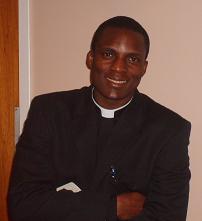
Rt. Revd Andudu Adam Elnail
Bishop of the Episcopal Diocese of Kadugli, Sudan

June 15, 2011

Archbishop of Canterbury's statement on South Kordofan, Sudan

From Lambeth Palace

The Archbishop of Canterbury, Dr Rowan Williams, has released the following statement regarding recent violence in South Kordofan, Sudan:

"Along with the Christian leaders represented in the Sudan Ecumenical Forum and Council of Churches and many more throughout the world, we deplore the mounting level of aggression and bloodshed in South Kordofan State and the indiscriminate violence on the part of government troops against civilians. Numerous villages have been bombed. More than 53,000 people have been driven from their homes. The new Anglican cathedral in Kadugli has been burned down. UN personnel in the capital, Kadugli, are confined to their compound and are unable to protect civilians; the city has been overrun by the army, and heavy force is being used by government troops to subdue militias in the area, with dire results for local people. Many brutal killings are being reported.

This violence is a major threat to the stability of Sudan just as the new state of South Sudan is coming into being. The humanitarian challenge is already great, and the risk of another Darfur situation, with civilian populations at the mercy of government-supported terror, is a real one.

International awareness of this situation is essential. The UN Security Council, the EU, the Arab League and the African Union need to co-operate in guaranteeing humanitarian access and safety for citizens, and we hope that our own government, which has declared its commitment to a peaceful future for Sudan, will play an important part in this."

ENDS

May 25, 2011

Church leader and Anglican Alliance call for immediate support for civilians in Sudan

By Laura Payne, Anglican Alliance

The Anglican Alliance has received reports of civilians fleeing from the contested Abyei area in Sudan after Northern troops swept through the town over the weekend. Civilians, many of whom fled on foot, headed further south, towards towns which are also being deserted amidst fears of an imminent attack.

A local church leader sent the following report from the region:

“Sudanese forces attacked Abyei town on Saturday at around 8pm. The whole town was completely set on fire and approximately 20,000 people fled towards the bush and towns in Warrap State. The situation on the ground is worsening. Displaced people and children are seriously affected living under trees in Agok. Civilians are down on streets and in bushes, no food, no shelter, no water and no medical assistance.

A local school has accommodated 2,800 displaced people despite the fact that there is very limited space for such a huge number of people. There is no other option, the deteriorating conditions force us to accept them in. The majority are still under trees with children, sick people and elderly people. People with communicable diseases are forced to sleep together with healthy people.

We are now calling for urgent support for civilians, who are lying on the ground without medical attention, shelter, food and water. We are left no choice but to raise the voice of the voiceless for relief assistance”.

The humanitarian situation, already critical, was compounded last night by heavy rainfall and the cancellation of a planned food distribution due to lack of security.

A fertile area claimed by both the North and the South, Abyei was due to vote on its future during a referendum on independence in the South earlier this year. The vote was postponed because of disagreements over eligibility and fears over increasing tension. Continuing ambiguity over the town’s final status has contributed to ongoing friction and conflict.

The Anglican Alliance, which brings together the Anglican family of churches and agencies for development, relief and advocacy, has received requests for advice on how Anglicans can respond to the humanitarian need. Sally Keeble, director, recommends Anglicans contact the government departments in their country with responsibility for foreign affairs and international aid. Ask them, preferably by email, to press for an end to the violence and to support appeals for emergency relief for the victims of this conflict. Then contact your own elected representative where you live and ask them to raise the issue publically and with government.

Anglicans who would like to donate money to the relief efforts in this emergency are encouraged to do so through the Anglican aid agency where they live.

Anglican are also asked to provide prayers of support and sympathy to those who need assistance.

Over the coming days, the Alliance will liaise with partner agencies over the crisis.

Laura Payne
Anglican Alliance
Office: +44 020 73133928
Email: laura.payne@aco.org

May 23, 2011

Renewed Unrest in Abyei Threatens Sudanese Peace

From: http://www.er-d.org/SudanUnrestMay2011

Unrest in the town of Abyei, situated on the border between Sudan and the soon-to-be independent state of Southern Sudan, is raising concerns locally and internationally about a possible reprise of the civil war that ravaged the country for decades between 1955 and 2005.

Northern troops invaded Abyei on May 21, taking over the city and causing an estimated 20,000 Southern Sudanese residing there to flee. Burning and looting are reported to be ongoing, in spite of calls from the United Nations Mission in Sudan and members of the UN Security Council for Khartoum to rein in its troops and establish control over armed elements operating in the area. Southern Sudanese officials are calling the invasion and occupation of Abyei illegal, and protesters are rallying in the Southern capital of Juba.

Juba is also the seat of the Episcopal Church of Sudan (ECS), headed by the Most Rev. Daniel Deng Bul. The ECS has been very active in responding to the needs of internally displaced people (IDPs) and returning refugees during all stages of the peace negotiations and the 2011 referendum on independence. Episcopal Relief & Development has reached out to Archbishop Deng Bul to offer assistance in this time of renewed turmoil.

The Comprehensive Peace Agreement (CPA) of 2005 put an official end to the North-South conflict and mandated the referendum on the secession of Southern Sudan that was held in January 2011. Although the referendum passed by a wide margin – Southern Sudan’s independence will take effect on July 9, 2011 – conflict in Abyei prevented voting from taking place there, and the status of Abyei was left to be decided at a later date.

Episcopal Relief & Development stands with the ECS during this difficult time, and encourages prayers for those living in the midst of this unrest.

May 18, 2011

Sudan’s churches prepare for two states by affirming "unity in Jesus Christ"

Sudan’s churches prepare for two states by affirming "unity in Jesus Christ"

By ACNS staff

As Sudan waits for the birth of two nation states following its referendum, Sudan’s Christians have issued a strong statement of solidarity and unity.

Leaders of ten Christian traditions in the country have signed their name to the communiqué recently issued following the General Assembly of the Sudan Council of Churches.

In an effort to reinforce that the creating of two countries will not divide the Christian community there the communiqué issued by the SCC states:

“With the prospects of two nations emerging from the old Sudan, we affirm our unity as the Church of Jesus Christ, both in the North and in the South. Being one body of Christ, we are one people and we are indivisible. We have one Lord, one faith, one baptism, one God and Father of all. Our divine mandate exceeds geographical and political boundaries.”

The statement also calls for freedom of worship, movement, expression and residence in the two states and requests that the government of South Sudan ensure the security and the protection of the civil population caught in the crossfire between the militias and the government forces.

The full communiqué is below:

THE COMMUNIQUE OF THE SUDAN COUNCIL OF CHURCHES
18TH GENERAL ASSEMBLY
MAY 9TH TO 11TH, 2011
JUBA, SOUTH SUDAN

COME, LET US REBUILD… AND WE WILL NO LONGER LIVE IN DISGRACE (NEHEMIAH 2:17B)

An Urgent Call to Rebuild

We, the delegates of the Sudan Council of Churches (SCC) General Assembly together with our partners and other participants, met in Juba from 9th to 11th of May, 2011 to pray and to reflect on the prevailing situation in our country. In our reflection, we were encouraged that although the way ahead of us maybe hard and difficult, God will see us through. We were exhorted to trust God for the future and to fix our eyes on him. He has been faithful to us as a people and we deeply thank him for what he has done, what he is doing and what he will do in us and through us. We are grateful for the attendance and input of the Minister for Justice and Legal Affairs and on the interim constitution of South Sudan. We were also honoured by the presence of the Presidential Advisor for Religious Affairs. We give God all the praise, all the honour and all the worship!

As we reflect on the time to rebuild we note the following:

  • We look back with sincere gratitude to God for the overwhelming success of the South Sudan referendum in January this year and for the peaceful conduct of Popular Consultation in Blue Nile and gubernatorial elections in Southern Kordofan, whose results are yet to be announced. We call for peace in South Kordofan no matter what the results of the election will be.
  • We look forward with faith for the birth of two states on July 9th. Our prophetic statement in March 2010 that Sudan shall never be the same again after the referendum has been fulfilled. The referendum event has passed, but the process of nation building has yet to start. It is now time to rebuild, so that we no longer live in disgrace.
  • With the prospects of two nations emerging from the old Sudan, we affirm our unity as the Church of Jesus Christ, both in the North and in the South. Being one body of Christ, we are one people and we are indivisible. We have one Lord, one faith, one baptism, one God and Father of all. Our divine mandate exceeds geographical and political boundaries.
  • We call for inclusive and open constitutional processes both in the North and in the South. While acknowledging the electoral mandates that the ruling parties in the North and in the South have, we still call for these inclusive and open constitutional processes because the interests of the nations are at stake and these interests are bigger than any one political body or group.
  • We call for freedom of movement, freedom of worship, freedom of expression, freedom of work and freedom of residence in the two states after July 9th. We also call upon the two states to respect, protect and guarantee minority rights including religious rights as enshrined in the interim constitutions and will be enshrined in the permanent constitutions.
  • We are concerned with the increasing waves of military activities, defections and counter-defections in the south as we approach the declaration of independence. It is our belief that the presidential amnesty offered to all armed groups in October 2010 is still holding and all those concerned should accordingly take advantage of this. Consequently, we call upon all armed groups to lay down their arms and come to the negotiating table. The way of peace is always the best.
  • We call upon the government of South Sudan to ensure the security and the protection of the civil population caught in the crossfire between the militias and the government forces. We expect the government forces, now transiting from Guerilla army to modern and conventional army, not to engage in criminal activities such as looting, rape and extra-judicial killing and killing of the innocent civilians in the process of dealing with armed groups’ leaders and their forces. The end never justifies the means.
  • We call for peaceful settlement of the Abyei question within the framework of the Comprehensive Peace Agreement (CPA). The people of Abyei must be given the freedom and the opportunity to decide their destiny. In this process, we urge the UN, the USA, the EU, the AU and the IGAD to arbitrate between the NCP and SPLM on the Abyei question. As the political tension continues to rise in Abyei, we urge the partners to the CPA to avoid warlike inflammatory language and instead resolve the question timely and peacefully. We see no need to incite violence in Abyei. We know that violence in all its forms always breeds violence, and violence will never be the way to settle grievances.
  • We call for the peaceful resolution of the Darfur problem.
  • We call upon the International Community, the Government of Sudan, the Government of South Sudan and all people of good will to assist in settling the Internally Displaced Persons/returnees. The suffering of these children of God as they try to find shelter, food and basic daily needs is our concern and should be for all people of conscience.

Conclusion

We recommit ourselves to the ministry of justice, peace and reconciliation in our country. In this regard, we resolve to roll out once again the people to people peace process in our communities to the effect that peace will prevail truly at all levels. As we engage in this noble task, we call upon our political leaders in the North and in the South to refrain from making provocative statements and instead preach peace, harmony and good neighbourliness among all our people. We all need peace even if we become two states.

We believe in the destiny of our people and we encourage all our people to live in peace as they endeavour to reach it. We have no doubt God will bless us. He began a good work in our country and he will bring it to completion. This is our faith!

Signed on 11th May 2011


Fr. Joshua Michael Bp.
Catholic Church

Ismail Abudigin
Episcopal Church of Sudan

Rev. Peter Makuac
Presbyterian Church of Sudan

Bp. Michael Taban
Sudan Pentecostal Church

Rev. Abraham Nul
Sudan Interior Church

Rev. Moses Gatkouth
Sudan Presbyterian Evangelical Church

Fr. Bishay Alantony
Coptic Orthodox Church

Pastor Barnabas Mattias
Sudan Church of Christ

Elder John Daniel
Greek Catholic Church

Bp. James Lagos
Africa Inland Church

Bp. Ezekiel Kondo
Chair, Sudan Council of Churches

Rev. Ramadan Chan Liol
General Secretary, SCC

February 8, 2011

Episcopal Church Presiding Bishop on Sudanese referendum

"We rejoice with our brothers and sisters in both Southern and Northern Sudan"


Southern Sudanese celebrate the birth of a new nation
Presiding bishop welcomes independence vote

By Matthew Davies, February 08, 2011

[Episcopal News Service] Celebrations for a new nation rippled throughout Southern Sudan as election officials confirmed that nearly 99 percent of voters in the referendum had chosen independence.

"There is great joy in Juba today at the official announcement of the results," Robin Denney, an Episcopal Church missionary based in Juba, told Episcopal News Service via email Feb. 8. "People huddled around radios and televisions at 7 p.m. last night to listen to the official ceremony."

The Southern Sudan Referendum Commission announced in Khartoum on Feb. 7 that 98.83 percent of voters had chosen to secede from the north. The turnout of registered voters was 98 percent.

"But even as people congratulate each other today, conversations turn to the future," said Denney, an agricultural consultant to the Episcopal Church of Sudan.

Sudan now enters a transitional period with the official start of a new nation scheduled for July 9. But many issues are still to be resolved, such as the sharing of oil revenues and border demarcation between the north and the south.

Denney acknowledged that the long-term focus had been on Jan. 9, 2011, the date that the week-long referendum commenced. "Now the focus has shifted to the long future ahead, nationhood, how to address the problems of insecurity and under-development that have plagued Southern Sudan in the past," she said. "The people of Southern Sudan recognize the many challenges ahead but have great hope and great vision for what their nation will become."

Presiding Bishop Katharine Jefferts Schori said Feb. 8 that the U.S.-based Episcopal Church "is deeply grateful for the peaceful outcome of the referendum in Sudan. We rejoice with our brothers and sisters in both Southern and Northern Sudan as they work for peaceful co-existence. Our partnerships with the Episcopal Church of Sudan, which will remain united as one church body, will continue. We pray for peace, and for communities where all may enjoy the abundant life for which all God's children have been created."

Sudanese President Omar al-Bashir, whose is wanted by the international criminal court for crimes against humanity, has reiterated his acceptance of the results. "We accept and welcome these results because they represent the will of the southern people," al-Bashir said Feb. 7 on national television, adding that he is committed to good relations with a new Southern Sudan.

"It is exciting to see that the referendum results have clearly shown the will of the people of Southern Sudan," Bishop Anthony Pogo of the Sudanese Diocese of Kajo Keji told ENS on Feb. 8. "President Bashir's announcement that he respects the results is encouraging as it will remove some of the fears that people had that the north would not welcome the results."

Pogo, who is chair of the communications commission for the Episcopal Church of Sudan, said: "There is a lot of happiness here with people saying that at long last we have got our freedom after over 50 years of waiting. The people in Kajo Keji are relieved that at long last real peace has been confirmed."

Pogo said he now prays that the two governing political parties -- the National Congress Party in the north and the Sudan People's Liberation Movement in the south -- "will agree amicably on the remaining pending issues in Abyei, citizenship, oil, the boundary and external debts."

A separate referendum that was to be held in the disputed border and oil-producing region of Abyei has been delayed indefinitely due to military tensions and differences between the north and south concerning voter eligibility.

President Barack Obama said on Feb. 7 that the referendum was "an inspiration to the world and another step forward in Africa's long journey toward justice and democracy. Now, all parties have a responsibility to ensure that this historic moment of promise becomes a moment of lasting progress."

Obama said that the Comprehensive Peace Agreement – which brought an end to decades of civil war and listed the referendum as a main provision – "must be fully implemented and outstanding disputes must be resolved peacefully." He also called for an end to the atrocities in Darfur, where a separate conflict has claimed as many as 300,000 lives.

Obama pledged to work with the governments of Sudan and Southern Sudan "to ensure a smooth and peaceful transition to independence. For those who meet all of their obligations, there is a path to greater prosperity and normal relations with the United States, including examining Sudan's designation as a state sponsor of terrorism. And while the road ahead will be difficult, those who seek a future of dignity and peace can be assured that they will have a steady partner and friend in the United States."

The Episcopal Church of Sudan -- with its four million members, the vast majority of whom are based in the south -- is considered one of the largest non-governmental organizations in Southern Sudan and is strategically placed to serves its people as the country looks towards the future.

The U.S.-based Episcopal Church has observed a Season of Prayer for Sudan since mid-September at Jefferts Schori's request. Vigils and personal prayer have since been a priority for many who have stood in solidarity which the Episcopal Church of Sudan, a long-standing partner of the U.S.-based Episcopal Church.

-- Matthew Davies is editor and international correspondent of the Episcopal News Service.

December 7, 2010

Lenten Retreat: The Experience of God in African Spirituality

Come for a day centered in the Daily Office and for Holy Communion with African music. There will be four sessions focused upon worship, meditation, community life, and healing.

The retreat will provide witness, advocacy, and prayer for justice for the people of Sudan and Darfur in this continued time of crisis and war. You will learn from teachers of African Spirituality and prayer.

The retreat supports the new campaign by The Episcopal Church, "A Season of Prayer for Sudan", which is committed to the welfare of Sudan, its Episcopal Church, and the country's future.

Leaders (more information about all of the leaders found below): The Rev. Canon Martin Oguike, The Rev. John Thompson-Quartey, The Rev. Dr. Augustine Unuigbe


When: Saturday March 12, from 10AM to 3pm

Cost: $15, lunch provided


Register: by Friday, March 4th. Check payable to the Diocese of New Jersey must be received by this date.

Registration: Register online here or email spaige@newjersey.anglican.org, fax registration form to 6093949546, or mail for to the diocese.

Contact: the Rev. Dr. Hugh Brown, ascprin@aol.com


Leaders biographies:

The Reverend Canon Martin Oguike is the vicar of St. John's Church, Woodbridge. Canon Oguike was born and raised in Nigeria, West Africa. He completed his undergraduate work in Birmingham University, UK. He holds a Master of Philosophy degree in Theology from the Birmingham University, UK and a Ph.D. in Church History from the University of Port-Harcourt, Nigeria. Canon Oguike lived through a genocidal civil war in Nigeria similar to the situation in Sudan/Darfur from 1967-1970 on which his dissertation on "The Roll of the Church in Nigerian Civil War" is based.

The Reverend C. John Thompson-Quartey is a native of Ghana, West Africa. He received his Bachelor of Science from Rutgers University, Newark NJ in 1993, and earned his Masters of Divinity from the General Theological Seminary, New York City, NY in 1997. He was ordained to the diaconate in May 1997, and to the Sacred Order of Priests in December of 1997. He served as Associate Rector for Youth and Family Ministries at Christ Episcopal Church in Ridgewood, NJ from 1997 until 1999. Then as Chaplain for Pastoral Care and Director of Community Outreach Programs at St. Paul's School in Concord, New Hampshire from 1999 until July 2005. He is presently the Rector of St. Mary's-by-the-Sea in Point Pleasant Beach, New Jersey, where he has served since 2005.


The Reverend Dr. Augustine Unuigbe is the Priest-in Charge of St. Augustine's Episcopal Church in Atlantic City. He is both a priest and a medical doctor, and has recent passed his medical boards in the United States.

Praying with and for the people of Sudan

From: Anglican Communion News Service
The thoughts and prayers of many in the Anglican Communion are focused on Sudan at this time, as the people of Southern Sudan prepare for a referendum to decide their future. The referendum will take place on 9 January next, and all are invited to pray and to focus their concerns on that war-torn country at this time.

Here are some prayers and background material which may help you to identify with Christians in Sudan at this time. If your Church has further material which you wish to share and to have included, do please send it to: clare.amos@aco.org

In land area Sudan is Africa's largest country and it is the tenth-largest country in the world. Bordered by nine other countries, it is central to the African and Arab worlds. Under the British administration the the north and south were governed separately. In 1954, at the end of British rule, Arab north and African south were unified as one country. Civil wars lasting about 40 years ended in 2005 with the Comprehensive Peace Agreement (CPA). The CPA gave the south political autonomy for 6 years, to be followed in 2011 by a referendum to decide whether or not it should become an independent country. It is this referendum which is taking place on 9 January. A further referendum is also due then on the future of the border area Abyei which has been contested between the North and South, as well as popular consultations for the people of the Nuba Mountains and Southern Blue Nile on their future. Read the rest here

Over $3000 raised!

A word of thanks to everyone who attended and donated money at the African Evensong on October 17th. Over 200 people attended this festive service and over $3000 were raised for the new Scholarship Fund for a Sudanese Priest.